Seeking local volunteers for International Workcamp in Phu Yen
In January 2013, SJ Vietnam would like to call several volunteers for International Workcamp in Phu Yen.
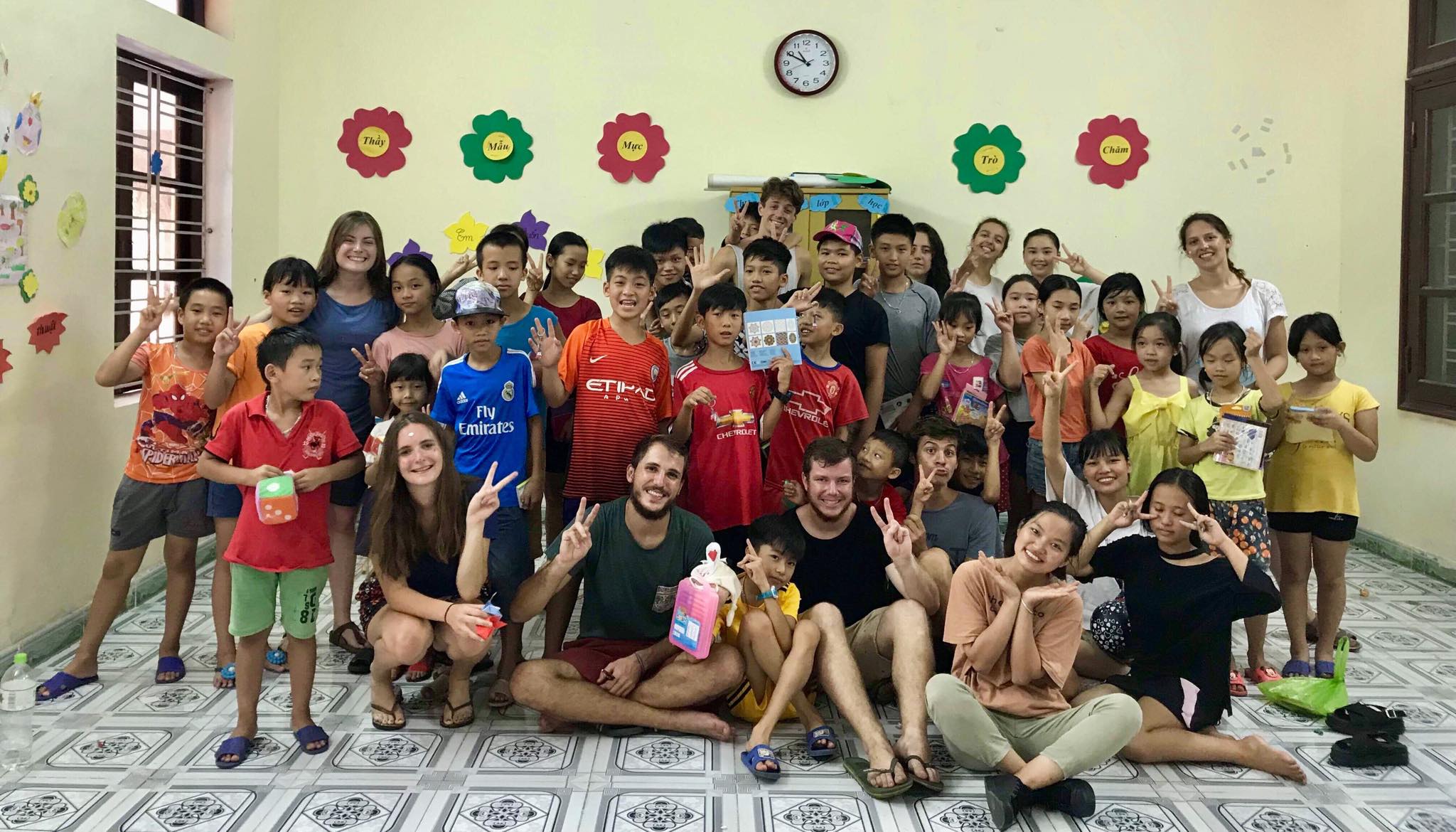
International Workcamp is a kind of short-term international volunteer program which will often last 2 weeks with the participating of the different national volunteers. During two weeks, all volunteers will stay in collective life through joining in common project and intercultural activities. International Workcamp is such a life experience program with the challenges of working in multinational culture which is so popular for Youth in the world.
For each program, we would like to seek 3 Vietnamese volunteers:
* Requirements:
- Take part in the whole program.
- Have abilities of creating and organizing varied activities for childen.
- Be confident in your ability to communicate and work in the multicultural enviroment, specifically with Korean volunteers in that case.
- Program language: English.
*Benefit:
- Give priority for official members of SJV Club
- Be supported accomodation and food during the program.
- Be issued Certification in the end of the program (if join in and follow all engagements).
* Activites: depend on each program, each activity will be carried out in different places. However in basic:
- Upgrade and enlarge classroom.
- Extend and repaint classroom.
- Organize several educational activites for local children.
- Organize Vietnam-Korea cultural night.
- Make “Chung” cake for localpeople and children.
* Application:
- Send a profile including CV and cover letter (sharing your own thought and motication for this program) to info2@sjvietnam.org
- Sending only cover letter if you are member of SJV Club
- Deadline: 14/12/2012
- Notice: Make clear which workcamp you would like to join (following the list code of workcamp below).
* Code of Workcamps:
- Korea 1: 03/01/2013 - 16/01/2013 in Tuy Hoa, Phu Yen
- Korea 2: 06/01/2013 - 14/01/2013 in Song Cau, Phu Yen
- Korea 3: 06/01/2013 - 14/01/2013 in Tuy Hoa, Phu Yen
- Korea 4: 21/01/2013 - 02/02/2013 in Tuy Hoa, Phu Yen
- Korea 5: 21/01/2013 - 02/02/2013 in Tuy Hoa, Phu Yen
After collecting applications, we will contact to suitable candidates to set up interview appointment.
If you need more information, don’t hesitate to send email to info2@sjvietnam.org or 0985558701 (Mr.Thanh)
---------------------------------------------------------------------------------------
Bánh chưng for the Fisher Village
Chung cake is a traditional Vietnamese cake made with glutinous rice, beans and meat. This a famous dish made during the Tet holiday.
A great party at the fisher village !
Workcamps are short-term projects (STV-projects), that seek to provide an experience that connects solidarity, intercultural learning, and
Workcamps are organized by SJ Vietnam in cooperation of partner organizations and institutes in/around Hanoi. Most workcamps have a duration of two weeks, and are designed for both national and international volunteers to have an opportunity to explore the potential of an international group, working and living together, to accomplish community work, and above all to have fun.
Workcamp participants will live and work together in one of the SJV houses in Hanoi, and will be guided by a Vietnamese or international workcamp leader. Together with the whole group, problems will have to be solved, decisions will have to be made, and actions will have to be taken; everybody is responsible for daily life. Team work is an essential concept in participating in a SJV workcamp. A workcamp is what each volunteer makes of it. It requires seeking out opportunities, looking to see what needs to be done, taking responsibility. Volunteers should feel as an equal part of workcamp management. Workcamps thrive on the initiatives of individuals.
One other important aspect of the work camps is the intercultural integration of the participants. You will live and work together with people from all over the world and with different ages, each with different views on life and culture. The work camp is an opportunity to learn about the cultures of your new colleagues and housemates. This could however result in difficulties and misunderstandings. Please regard this as an opportunity to learn, instead of a source of conflict. Furthermore, please be aware of the importance of assisting everyone in speaking the stated language (ENGLISH) of the workcamp. Volunteers from the same countries should be careful not to exclude other volunteers by lapsing into conversations and cultural patterns which others may not understand.
Furthermore, volunteers who are unskilled in certain fields are encouraged to learn new abilities. In this learning process, volunteers may have to seek a balance between good, efficient work and should be prepared for making mistakes due to inexperience.
It is strongly recommended that you do not arrive late or depart early from a workcamp. The workcamp runs for just two weeks, and if you arrive late, you will miss the crucial period of orientation and introduction. Furthermore, departing early can erode the feeling of solidarity in the group, and has a negative effect on the workcamp’s atmosphere.
Remember that a workcamp is not a holiday, professional training or a social-humanitarian project ! Do not expect to help the “poorest” people and to understand the situation they are in, within just two weeks. You will contribute for a short period of time in a long-term project, so no direct results will be noticeable. The most important result however will be a personal change and the energy that you will bring to your project. Trough these work camps you will probably see the world from a different point of view. The cultural challenges that volunteers will encounter during their work camp will strengthen them in their knowledge of problem-solving and life experience. So that when you return home, you will probably look differently at things that always seemed very common before.
International Workcamps began in its modern form in 1920. The idea was the result of a meeting of a group of people in a house in the Netherlands following the First World War (1914-1918). The four horrific years of the first world war left Europe in ruins and its people in despair.They decided that they had to do something active to try to deal with both the dreadful effects of the war, and to find a way to remove the causes of conflict. One of the people there, Pierre Ceresole invited volunteers from former enemy countries rebuild together a village near Verdun in France which had been the scene of some of the fiercest fighting, including one 10 month battle in 1916 which claimed over one million lives. It was the first international workcamp. Some believed that international encounters of young people who jointly engage in work for the community lead to bonds and friendship across national boundaries and consequently could prevent future conflicts. Out of this belief several organisations (a majority of them with a religious background) started International Voluntary Service programmes. Three of these still exist today: Service Civil International, Youth Action for Peace and the International Reconciliation Union (Internationaler Versöhnungsbund). All three organisations were fairly revolutionary for their time – not so much regarding their aims but regarding their principles. Their activities were open to both sexes (in a time when women were still fighting for their basic rights) and they avoided all kinds of military drill in their work camps. They believed strongly in the principle that the young people should engage voluntarily in their activities, principles which have remained valid up to today.
In 2004, 2,700 projects in 94 countries were organized in 2004 by workcamp organizations.
The coordinator or leader is a local volunteer directly placed by SJ Vietnam staff to help organise the project in collaboration with the international volunteers. It is really important to note that the workcamp leaders are volunteers themself and are not paid. They are there to help the management of the workcamp but not to be translators, tourist guides or maids.
Local workcamp volunteers are from Vietnam, mainly from Hanoi, they are Vietnamese or expat people living in Vietnam (Belgium, Canada, Italy,Germany, Korea, Nicaragua, UK and USA).Our foreign workcamp and LTV volunteers come from everywhere in the world; our organization has hosted international volunteers from around the world including: Australia, France, Belgium, Canada, Croatia, Czech Republic, South Korea, Japan, Russia, Spain, Netherlands, USA, UK, etc.. The majority of our volunteers are students between 16 and 28 years old but also older people, couples and even famillies with babies! The average age of workcamp volunteers is around 23 years old and 60 % are women.
So far our Vietnamese volunteers are also travellers and you could meet them in Thailand, South Korea, France, Belgium, Indonesia, India, Indonesia, Italy, Japan, Germany, Russia, China, Czech Republic, Mexico, Spain, UK, USA... SJV volunteers are everywhere !
The common point between all these young and less young people is that all of them believe that it is possible to live together on this earth even if we are from different cultures and that each of us can change the world around us a little bit through concrete actions.
SJ Vietnam encourages people with disabilities to join our work camps. Contact us for more details.
community life.While the workcamps we offer do improve the quality of life for others, it is equally important as a time to reflect on our own way of life and to meet other young people. The significance of what we do is more than social charity, it is an encounter with real people in the real world. Workcamps go beyond the familiar road of commercial society, taking us outside of our comfort zone.
When was the first international workcamp ?
What is a workcamp leader ?
Who are our volunteers ?
Volunteers with disability